10.30.2008

Hasta la Victoria Siempre!

Live At Carnegie Hall
Buena Vista Social Club
Nonesuch Records


It’s one of those albums that everyone absolutely must listen to, right alongside Pink Floyd’s The Wall and The Sex Pistols’ Never Mind the Bollocks, a quintessential rite of passage for all music lovers. Originally a social club instituted in the 1940’s in Havana, Buena Vista Social Club revisits the warmth of Cuban rhythm in a way that’s both fresh and nostalgic. Songs dating from the 1920’s from the heart of Cuba were revived by Ry Cooder, who got these guys out of retirement to perform together at Carnegie Hall. What we get in the end is almost two dozen talented musicians performing exotic tunes from pre-Revolutionary times, like some sort of time capsule. Ibrahim Ferrer, legendary artist fronts the 22-member arrangement, giving the entire set a gorgeous, historical, organic texture while he sings about the innocence of pre-communist Cuba.

Oasis will Shake Your Ragdoll, Baby

Dig Out Your Soul
Oasis
Reprise Records


After a three-year hiatus, Oasis has released their seventh studio album, Dig Out Your Soul, which is arguably their best work in the last decade. While the Manchester quintet has grown up a bit, their boyish wit and juvenile charms still ring strong. The album opens with “Bag it Up,” a catchy alternative anthem that carries through while Liam sings about the “heebie jeebies.” The album takes a more melodic detour in later tracks such as “The Shock of the Lightning” and the ultra-aggressive, self-deprecating tune “Ain’t Got Nothing.” So far it seems that the break has proved to be a good choice for the band, who suffered from a major decline in popularity during the early 2000’s when Britpop wasn’t favored too strongly. Fronted by two egomaniacal Gallagher brothers, Dig Out Your Soul shows some kind of soulful growth that fans like to see, even when a band’s charm was previously defined by being an asshole.

10.29.2008

Environment is doomed, sustainability experts say
By Miné Salkin


Guest speaker Stephen Lewis told students that “this planet is doomed” at a conference advocating Students for Sustainability this afternoon at the University of British Columbia.

The Nobel-Prize winning diplomat, politician, and broadcaster said that all international and other government actions towards reducing greenhouse gas emissions, such as the 1992 World Summit Conference were ways of “getting away with the appearance of movement” in regards to the environmental crisis.

Lewis capitalized on the ineffectuality of the current Conservative government in Canada, and the capitalist framework that developed nations strive to adhere to while ignoring the tell-tale apocalyptic signs of a world in peril. He said the Harper government is one whose “agenda for the future abandoned the environment,” and that it focuses attention on propping up oil and gas companies who further the environmental decline by protecting corporate interests.


Created by the Sierra Youth Coalition and the David Suzuki Foundation, The Students for Sustainability Tour began last month to educate post-secondary students across the country on how to decrease their carbon footprint. Their message is a tough one: some of the environmental damage that has already been done is irreversible.

Quoting from George Monbiot’s book Heat, Lewis said that something must be done for the environment, otherwise we are doomed to an apocalyptic reality of irrevocable environmental and social damage that will happen within the next 40 years. “We have already seen 150,000 excess deaths due to climate change alone,” he said.


Two sides of the same coin

Motivational speaker Severin Suzuki said that the current global economic crisis is indicative of an old-world capitalist mentality that reflects its own failings, and that the reality of climate change is an impetus for both environmental and economic action.

“This crisis is an opportunity to understand how our economic system of deregulation and globalization is unsustainable. This economic system has evolved in a way that has resulted in the exploitation and destruction of the environment,” she said.


Suzuki says that we must think of new ways to create an environmentally-friendly economic system that favors the sustainability niche in the 21st century. “The environmental momentum should not be broken by an economic crisis,” she said.


Cow problem


Unsustainable industries are a large culprit in both the economic crisis and the intensification of climate change, triathlete and author of The Thrive Diet Brendan Brazier explained.

Brazier points to statistics that indicate that the cattle industry is highly unsustainable. While it takes anywhere from 2,000 to 8,000 gallons of water to produce 1 lb of beef, other protein-rich plants such as hemp only require 100 gallons to produce 1 lb of hemp seed, and are resistant to disease and don’t require pesticides.

The UN published a report in 2006 claiming that livestock animals contribute 38% more greenhouse gasses than all of our transportation combined, and are dooming us all in the environmental and economic sense.

According to Brazier, 70% of the food grown around the world is for animal feed, and it requires 9-16 lbs of grain to get 1 lb of beef. “We are creating more CO2 than we drive,” Brazier said.

Lewis ended the conference with a fearful, motivational tone. “If we don’t move with supernatural rapidity, I think there’s going to be some kind of cataclysm between 2030 and 2050,” he said.

9.27.2008

bad religion creates harmonious anarchy

Bad Religion
September 14 2008
Commodore Ballroom


It’s hard to imagine a 15 year-old frontman Greg Graffin and his school friends deciding to form Bad Religion, the most epic, accomplished and inspiring punk rock bands. How could one envision such libertarian punk fantasies, or such immaculate hardcore harmony at such a tender and suggestible age?

The night kicked off with two nondescript screamo bands that sucked so badly that no more mention shall be made of them. It was a Sunday night, and the angry punks in the crowd kept chugging back more beer, checking the time, and impatiently pushing up closer to the front, waiting for the show to start. There was a definite sense of growing frustration; the Commodore’s decision to downsize drinks from bottles to plastic cups coupled with the fact that it was they worst night of the week in which to hammered was on everyone’s mind. Finally the legendary sextet walked onto the stage, and the body of the crowd converged to a dense square-shaped mass of excitement.

They started the show with a highly energized performance of “21st Century Digital Boy” originally recorded for their fifth album Against the Grain (1990). It’s likely one of the best songs to start out with, not just because it’s infectious and catchy, but we can all relate to Graffin’ lament that “I don’t know how to live/ But I got a lot of toys.” It also brings to mind all of our mothers strung out on valium, an sad image that is surprisingly “effectual.” Selecting from a wide range of singles, and some not-so-common tracks like “Anesthesia,” BR gave a fantastic set list that sampled from the whole 28-year span of their discography.

Three of the six band members on stage were the original founding members, and they were easily spotted. Graffin delivered a vibrant, defiant performance: his iconic finger-pointing and unrelenting stare gave him an edge to his philosophical rants. Arguing for a rejection of consumerist culture and social conformity, usually guys this age come across as being pedantic or just full of it. Even those more sensitive of loud, distorted music should venture into the lyrical world of BR. Songwriter Graffin holds a Ph.D., and his understanding of politics, injustice, and individual suffering is delivered with poetic integrity, and reinvents the idea of social responsibility through critical thinking and non-conformity.


Bass guitarist Jay Bentley seemed to have the most fun on our Vancouver stage. He jumped around and sweated the most profusely, smiling demonically like some intense, disturbing fat kid eyeing your DQ Parfait on the bus. Speaking of which, lead guitarist Brian Baker looked terribly overheated, unfit, and generally sagged instead of rising to the occasion. While performing the quintessential punk song “Come Join Us” off the 1996 album The Gray Race, Baker hogged the one fan the entire time. Come on, Brian.

Overall the show was pretty fantastic. They may be getting older, but better in the same way as a wine slowly ages to perfection. A punk wine.

9.24.2008

some freaky ass shit

Yolk of the Golden Egg
Dandi Wind
Summer Lovers Unlimited


Dandi Wind’s new album Yolk of the Golden Egg is a sonic journey that challenges every spectrum of electronica. Caught somewhere between a surreal utopic musical vision, and something that could only have been spawned from a ritualistic love orgy between Kate Bush, Bjork and Aphex Twin’s Richard D. James, the record shows no weaknesses. It opens with “The Battle of Verdun,” aptly catching the industrial bustle of its Quebec recording locale, and moves through what seems like a futuristic, cacophonic scene of torture. Raw, edgy and highly textured, the sounds take detours through the complexity of the psyche in a way that could be likened to the spiritual despair and disillusionment of Trent Reznor, but with more emphasis on a clear articulation of ugliness. Never failing to surprise, the song “Johatsu” sounds like a cracked-out late 80’s dance exercise tape, while suggesting the theme that would should all “surrender to the machine.” The album climaxes with the final track entitled “Dance of the Paralytic,” whose bass-rich beat is juxtaposed against an ineffable wet thumping noise that brings amniotic fluid to mind. While overtly corporeal, the album points at an introspective notion in quoting Dostoevsky and the parable of the old dreamer rummaging through his dreams in vain. While its message is not always accessible, Yolk of the Golden Egg is a worthwhile musical venture for those who want something a little more violent in spirit.

malkin bowl, salkin scowl

Stanley Park Singing Exhibition
August 31, 2008
Day One


It was one of those lazy late summer afternoons that you could eat with a spoon. While most music festivals tend to have an anxious, apprehensive tension amongst the crowd, the grounds were covered by hippies, young parents, and even the occasional punk who were all sitting comfortably on the warm grass.

The Evaporators came on sharply, and started to stir up the crowd with their bare chested antics. Clad in white jumpsuits with red and blue stripes, Nardwar the Human Serviette entreated us to a good larf, exposing his wooly chest, screaming lyrics about homelessness, and countless other acts of unconventional behavior. While the set list focused on their last album Gassy Jack & Other Tales, one could argue that what the band lacks in actual musical talent, they make up for in hilariously eccentric body play. Running through the crowd with maracas and a demented grin on his face, or climbing onto the audience to create a human piano stand, The Evaporators impressed us all with their relentless anarchist spirit.

After the thrash, Deerhoof of San Francisco changed the atmosphere with their quirky alt-rock sound delicately coupled with the little-girl voice of singer Satomi Matzuaki. Rocky but sultry, the quartet rocked out with classic songs such as “Twin Killers” and other tunes from The Runners Four. Their aural quirkiness was matched by their physical gestures, as Greg Saunier and John Dietrich plucked and played in what seemed like borderline seizure-type motion.

Destroyer’s performance was weird and cacophonic, but not in the way that most people enjoy that musical experiment. Dan Bejar’s lyrics of love lost and spiritual confusion were cryptic and challenging, but his voice brings to mind a love-sick, drunken hobo. Coupled with the guitarist’s unreasonable use of tremolo, this act left much to be desired.

While the fest had its share of eccentricity, Andrew Bird and Neko Case had an altruistic soothing effect to counteract it. Bird, the singer/songwriter/multi-instrumentalist from Chicago Illinois was intoxicating as the twilight began to set in. Singing beautiful things about intuition amidst a backdrop of cello strings and pizzicato violin, Bird was one of the best acts of the night.

Following him was Neko Case, who played songs from her upcoming album due out in March 09. While she belts it out with The New Pornographers, Neko’s performance was humbling and sweet, a familiar country feeling where the singer croons softly and laughs at herself between songs. She sang “I wish I was the Moon tonight” in a way that brought to mind a modern day Patsy Cline. Sad but spirited, Neko’s voice was endearing and humble to the core, and her lyrical component was touching as it revealed the wisdom of an old soul caught in the commercialism of the 21st century.

8.28.2008

it was about time...

radiohead
august 19 2008
thunderbird stadium


After about 4 years of worshipping the entire career of my holy grail of favorite bands, I finally caught them live, in the rain, at Thunderbird Stadium. While some 25 000 people may have been disillusioned by the ultimately shitty weather elements of the show, I will argue with anyone who stands in my way and says that it impeded the quality of their performance. On the contrary, the humid and warm summer rain gave Thom Yorke's vocals a wet, throaty texture to his usual characteristic papery delivery. Further, and perhaps I should have mentioned this first, it reinforced the dreary nature of their music, which ultimately suggests an incurable optimism that things will and have the potential to be better. To quote Voltaire, "All is for the best in this best of all possible worlds," and fuck I don't care that I got drenched because the show was bloody cathartic as hell.

The set list was perfect; while heavily weighted by songs from their latest album In Rainbows, the quartet played a range from The Bends, OK Computer, the jazzier Amnesiac and surprisingly even from their contributions to the Baz Lurhman film Romeo and Juliet.

While it may seem trivial, I would be remiss if I didn't comment on the lighting engineering of the set. Brilliant lateral lighting sequences flashed almost mathematically, emphasizing the plurality of sounds from In Rainbows, encompassing the multiple realizability of the universe.

I really can't say anything bad about this show. Who gives a fuck that the rain shat down on us all?

8.14.2008

girls, girls, girls!

Common Reaction
Uh Huh Her
Nettwerk Records


Uh Huh Her’s debut full-length album Common Reaction is a melodic hybrid of powerful electro and indie-inspired sounds. The group consists of the musical talents of Leisha Hayley and multi-instrumentalist Camila Grey, whose female vocal pairings gives the album a sultry, organic texture. While the initial sound of the album seems merely stylish and elite, the songs move through more introspective topics that elevates them from nothing more than club music - songs such as “Explode” explore the dark sides of female sexuality, abandonment, and the pursuit of love in a superficial demographic. In fact, Hailey and Grey use this ironic notion and push it further, motioning towards a kind of glamorized version of Tegan and Sara, but through sad lyrical gestures which are camouflaged by upbeat, catchy electronic anthems. The track “Away From Here” epitomizes this world of pain glossed over by outward beauty, as they sing “What if I could change the world one day at a time/ I’d go back and stay/ Too much is gone/ Shallow in depth/ So I see everything clear.” Inspired by a PJ Harvey B-Side, offended by the notion of a love song, Uh Huh Huh moves beyond the dance scene through a shimmery, aurally pleasing display of the female persuasion.

8.03.2008

pemberton 2008: another one bites the dust


In many ways, this year's Pemberton festival turned all of us concert-goers into experimental subjects for how a festival should be organized. During the past week, I've read several reviews in many of the local papers, but none of which captured the entire sentiment of the three-day gongshow than the headline for the 24hrs magazine which read: "traffic, dust, fun," succinctly describing the order of the weekend's most memorable elements.

After waiting in line for about 14 hours in a hot, inland dustbowl, I finally caught the Metric show on Friday afternoon. Emily Haines was decked out in a shimmery, almost space-age sliver minidress that reminded me of a futuristic Kubrickian vision. Later on that evening I enjoyed Wolfmother's metallic rampage as the band ravaged Zeppelin's hits and left the crowd begging for more distorted violence. Come nightfall, the Mount Currie stage ushered in Nine Inch Nails, the day's headliners, and the shit hit the fan. I was about 40 feet away from the mosh pit but still got tossed about and burned by rogue cigarettes as the show peaked at "Closer."

On Saturday morning we had a lovely omelette breakfast at the campsite and went back to see Black Mountain, The Tragically Hip and of course, Tom Petty and the Heartbreakers. During the show, Gordon Downie during entreated the crowd to his iconic shifty-eyed, but strangely friendly smiles while pretending to be an ape who didn't comprehend the electronic capacities of his own microphone. Tom Petty at twilight was smooth and enchanting as the crowd metamorphosed into middle-aged rock veterans who didn't have the heart to block your view of the stage. The Flaming Lips showed up with these big fucking balloon things full of confetti that complimented the band's eccentric lyrical component. To add to the confusion, they had a chorus of Teletubbies on the left side dancing and singing, a bizarre combination of weird music and even more strange scenery to make a fantastic show. The verdict? Black Mountain offered far more energy live and attracted an exodus of smelly but chill hippies and modern bohemians. Man I just love that stuff way too much.

The downside of this all is that I had to leave and miss the entire last day due to complications and major pooning out by some of my companions. I don't have anything else left to say except that getting to and from the show was a fucking nightmare, but the music was fabulous and a remedy for it all. If Pemberton hopes to be an annual event it better shape up its over-idealistic view of checking 10,000 people's personal bags to see if they snuck in booze after they've been waiting around for hours. You just can't treat people like that.

6.26.2008

The Notwist
The Devil, You + Me
Domino Records


Despite their woodland Bavarian roots, The Notwist’s new album The Devil, You + Me encompasses a huge range of warm euphoric tones not unlike a soft plume of opium smoke. The debut track entitled “Good Lies” discusses the good life, one full of sweet lies, in a style that bridges the gap between the sounds of Death Cab and Interpol, but with less hesitation and insecurity. Smooth and delicately crafted, the album weaves together soulful string arrangements throughout the work, showing a progressive movement from their original sonic metal experimentations from the late 1980’s. As the album moves along, electronic rhythms and loops are explored, adding tremendous musical textures and varieties ranging from rhythmically-charged to familiar and melancholic. The track “Where in This World” brings Thom Yorke’s haunting voice to mind as Markus Archer’s strained crooning voice gives an eerie touch to these more introspective songs. The lyrical themes of the album are equally profound in complexity and density, as notions of spiritual restlessness, the decay of the material world and other compelling existential questions are challenged. The Notwist’s droning themes and dark lyrical content suggest that they’re plagued by a Prufrockian 21st century paralysis, but the polarity of their sound gives the optimistic edge that they’re striving for purposive movement which gets countered again in never ending continuance. On the whole, The Devil, You + Me is a microcosm of unending spiritual disparity that renews itself yet again for the next divergent sound.

6.23.2008

the dandy warhols at richard's on richards


the dandy warhols
richard's on richards
june 18.08

Yes! Everytime the Dandy Warhols come to the city there's a definitive buzz of excitment amongst the local hedonists and Vancouver hipster bohemians. Announced less than two weeks before the show, The Dandys decided to play four additional shows as a prelude to their world tour which begins in less than a month from now. Come September they're releasing their seventh studio album Earth to the Dandy Warhols, which every rock-alternative music fan desperately needs to acquire.


Prior to the show, there was a bit of disappointment as the venue was changed last minute from the opulent setting of the Vogue theatre to Richard's on Richards, however this proved to be a massive improvement in the end considering the intimacy that was produced by the bar's compact space. Four rows away from Courtney Taylor-Taylor's feet could feel the hot sweat and breath of the Oregon quartet as they ripped the stage with new unreleased songs. The show started up with an energetically charged performance of "Wasp in the Lotus," a new Dandy's classic with their trademark bubble-gummy completely enveloping guitar-heavy chorus. Amongst a set list of new songs, the band also rocked out to their older tunes, such as "You Were the Last High," "Country Leaver" and of course, "Bohemian Like You."


Aside from their infectiously energetic musical performances, the attitude of the quartet is a cornerstone of their image as mid-90's veteran alt-rockers who are still going strong. Courtney's pouty lips and sultry swagger give the frontman an heroin-chic edge and a hard-to get attitude that leaves everyone wanting more. Lead guitarist Peter Holmstrom always starts out looking dark, sharp and shifty and ends up with mascara sweat all over his eyes.

The bottom line: The Dandy Warhols are fucking cool. They always leave us wanting more and they know it.

6.22.2008

Kurt Cobain Journals

[Riverhead Books, 2002]

Don’t read my diary when I’m gone.

OK, I’m going to work now, when you wake up this morning, please read my diary. Look through my things, and figure me out.


Perhaps it is a bit unusual to be seeing a reactionary review of Kurt Cobain’s Journals these days, but the lingering pain and sadness of Nirvana’s front man resonates strongly yet. Written in the author’s childish, chicken-scratch hand, Cobain’s honesty shines through as he narrates the course of the band’s history, their rise to fame, discussions of love and sex, and other deeply personal avenues of introspection. Spiritual and sprawling, Journals is an intimate posthumous look into the complicated balance between rock and roll, the personal alienation of fame, and the dark world of drug addiction.


The everlasting image of Cobain is that of a man tortured by the conflicted personalities he had to endure: the depressed, social outcast and the epitome of the new rock star, the dawning of the age of the grunge.

Aside from reading his first-hand accounts of living the life of a terminally-depressed heroin addict, Journals show Kurt’s struggle between the massive dichotomies he sets up in his own mind. Caught between right and wrong, fleeting happiness and self-induced torture, the rock star and the junkie, Cobain struggles to identify himself through these polar opposites. This theme is even prefaced on the first page of the diary as he writes:

"Don’t read my diary when I’m gone.

OK, I’m going to work now, when you wake up this morning, please read my diary. Look through my things, and figure me out."


Terrible, but poignant. It’s conceivable that most musicians become somewhat troubled by the cost of fame, but Kurt’s radical split makes the whole of Journals so incredibly fascinating as it samples from the multiply realizable extremes of his psychological states. Cobain’s need to be validated in some other way which seems unintelligible even to himself is something worthy of an Aronofsky film; beguilingly contradictory and amazing too.


Dancing between ideals of nihilism and an utopic Buddhist vision of the world, Kurt writes openly about other more personal matters in a way that simultaneously repulses and attracts. In one particularly gruesome entry he writes about a girl whom in junior high attempts to have intercourse with him. When he asks if she’s done it before she replies “many times, mainly with my cousin” which causes a frightened yet sexually curious adolescent boy to develop an unusual obsession with the female reproductive system and images of fetuses. Upon returning to school, he classmates call him the “retard f*cker,” and Cobain’s persona of the social reject is quickly adopted. It’s not hard to imagine how the lower-middle class Aberdeen youth who grew up in such a rural logging community could have become the beacon of tormented youth of America’s early 90’s era. This honesty pervades the entirety of Journals; Cobain’s poetic sensitivity is but a glimmer of optimism amongst a backdrop of the corporate American music industry, backed up with scribbles of recipes for fried chicken and french toast.

Cobain’s Journals, in view of his music creates the overall impression of a neglected, insecure musician becoming increasingly uneasy with his fame. The tattered journal entries parallel the conflict and confusion voiced in his music, a scrawny yet soulful individual who somehow represented the impotence of his own generation through the strained throaty textures of his punk-metal rock hybrid.

5.16.2008

one's not enough

One’s Not Enough
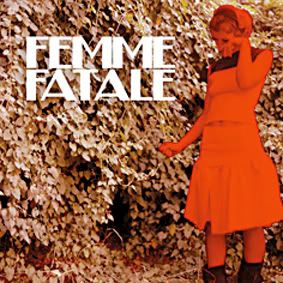
Femme Fatality
Stickfigure Recordings


Without explicitly promoting a drug lifestyle, One’s Not Enough is indeed enough to make anyone want to begin leading an alternative, counter-culture mode de vie. The album opens powerfully with “Lucky Lover,” a modern-day disco anthem that sounds like a toss-up between NIN and Daft Punk. While heavily influenced by electro-pop sounds, Femme Fatale is fully endowed with other musical textures and flavors. The track “Come On, Come Out” has a late 80’s new wave sound coupled with a lyrical base not unlike Strummer’s protesting voice in The Clash.

Another impressive feature of this group is their incomparable energy which is diffused through the entire album in catchy, upbeat and tweaked-out electronic rhythms. The title track explodes with hyped-up musical fervor that would intimidate the faint of heart.

The album takes a darker turn near the end of the album; the song “Don’t Kill for Me” contemplates murder, death, and the unmistakeable moment where a life fades away. The final track talks about the pain of fame and the price of notoriety in a way that is honest and lyrically insightful.
Eye Contact
E.S.L


E.S.L’s debut album Eye Contact is a fantastical, muscial-theatrical type hybrid that seems to bridge together the innocence of black and white films with modern day anxieties.

The album opens with a rhythmically-driven track which is backed up by earthy cellos chanting in a catchy gusto melody. Following this sound, the album takes a more soulful, heartfelt turn at “Side by Side” where singer Marta Jacubek-McKeever’s vocal ache resonates alongside the melancholic violin arrangement. However, this album possesses more than just a simple juxtaposition between innocence and heartache, as it ventures into musical dramas and swing melodies. Duffy Driediger of Ladyhawk samples his lyrical talent in “Like a Hurricane,” giving the album a sweet touch of masculinity amongst a plethora of lush strings. Marta indulges her Polish ancestry with “Czarne Oczy,” creating a campy, foreign-like sound that makes you want to dance around a campfire and howl at the moon. Still not random enough? The quartet completes the album with all-girl cover of Beastie Boy’s classic song “Girls.” This fact alone should inspire immediate respect for the Vancouver group.

Retrospectively, Eye Contact seems like the kind of albumv that would have existed if transcendental musicians Bjork and Elsiane combined with the 90’s swing band the Squirrel Nut Zippers would have sounded like, but in a black and white film from the 30’s.

4.25.2008

la réjection culturelle

Culture Reject
Culture Reject
White Whale Records


Twangy and eclectic, Culture Reject is but a antidote for Belle and Sebastian fans, and others who are looking something less mainstream than Broken Social Scene. Singer and multi-instrumentalist Michael O’Connell samples from his well versed musical training, using pretty much any instrument that can create noise, adding to his knowledge of african beats which he acquired from his own personal travels. Lyrics such as “I wanna go home/ and get myself stoned” instill that honest, bohemian attitude that a lot of Canadian music these days seems to be lacking. His whispery thin vocal delivery is particularly noticeable in tracks such as “Museums” and “Oh Remain,” giving it a soft jazzy feel at times. This album as a whole is appropriate at all times and for all occasions: it encompasses pretty much the scope from jazz to random rhythmical melodies, and O’Connell’s lyrics are evocative and humble. In the track “Overflow,” he croons softly about a cruel, spontaneous woman, bewailing his unrequited love in a way that gets into your heart - a melodic and soulful musical base with that biting taste of rejection. On the whole, Culture Reject is an album designed with the sensitive of heart in mind living in a cruel, cruel world.

4.15.2008

final art project


By graphically manipulating an existing set of images, it is possible to achieve a new meaning or significance to the image itself, once confronted by an oblique or surprising relation to another object.

This concept was the impetus for my own exploration of space and socialization, and the idea that the landscape which we have created is no longer our own, but rather an entity which shapes human beings and our motivations.

The specific inquiry of my project delves into questions of urbanization and its relation to nationhood - the use of urban decay as the dominant imagery emphasizes the decadence of consumerism and the lack of moral conscience in such issues. Each image is a flag, consisting in a collage of various images of iconoclastic culture heroes, counter-culture vagabonds, and synthetic consumer products.

The first image deals with this concept, but in a mocking, ridiculous way. The black and white figures of Laurel and Hardy and the iconographic Big Bird are contrasted against an aged brick building. Perhaps this is the way one should view the contents or materials of nationhood.


The second image is composed almost entirely of primary and complementary colors. The simplicity of the human figure on the left contrasted with the byzantine map of London on the right illustrates the artificiality of urban life and its lack of connect with nature and human nature.

The third image is a mock-advertisement for recycling, with a strong red wavelength throughout, giving it an oxidized aesthetic which makes it more earthy. Rather than viewing a path carved out in a forest, it is a path cut through a massive heap of oily, rubber tires. It accompanies the fourth image, which takes this idea to an absurd extreme. Both are intended to elucidate the need for moralistic, rather than capitalist or utilitarian needs for our landscape.


The fifth composition denotes the pitfalls of urbanization in terms of the lack of connect, or communication with the landscape. Jaws break off from atrophy while sheep are being genetically cloned, and the Mississippi is equally industrial.
The sixth and final image relates notions of nationhood and how this dwindling, unsafe manufactured landscape is becoming unlivable.

“The City in Man” - an idea that anything, even a map, can be an advertisement. Indeed, so many of the landscapes we view as mundane are in actuality manufactured, human constructs with utilitarian and capitalistic features.

4.06.2008

there will be blood


Paul Thomas Anderson's newest film is a gritty tale of jealousy, greed and revenge, set at the turn of the twentieth century when the American oil industry was just beginning.

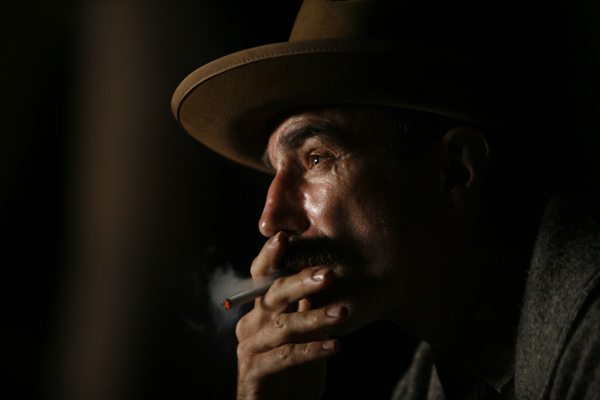
Daniel Day-Lewis plays Daniel Plainview, a self-made man who starts his own drilling company and eventually attains God-like status in the infancy of American capitalism. Plainview is a loosely based adaptation of oil tycoon Edward Doheny, and this oil man is extremely reminiscent of Count Dracula. Anderson creates a character with his heart set on a misanthropic vision - to escape the falsity of other human beings who only exist to stand in his way.

Indeed, Day-Lewis' character has an Iago-like moral imperative and only seeks to gratify his selfish designs, abandoning his adopted son in pursuit of wealth. It recalls to mind the kind of men who make up the world; only with more blood and oil saturating this industrial, harsh aesthetic.


Paul Dano (Little Miss Sunshine) plays Eli Sunday, an evangelist priest whose family's land is sold in order to facilitate more oil drilling and greedy profits. Dano represents the naive, predictable idealism of the most flamboyant sect of Christianity which ultimately fails in its pursuit to offer salvation to the ravenous souls lost in the oily abyss of the drilling plains. It's a classic tale of gluttony and human vice versus the powers of the good; and predictably enough, the thirst for oil conquers all.

Some other of Anderson's films include Magnolia (1999), Punch-Drunk Love (2002) and Boogie Nights (1997), and share the same compelling insights on the darker sides of human nature.

4.02.2008

some other artistic samples

so for the final visual arts project i've decided to do mine on how geography is a human invention - a kind of urban decay thing... my only concern is that what i'll come up with is obviously moralistic or didactic, which isn't what i'm going for. instead, i just want to take the piss out of human beings in a lightly comedic, borderline commercial way.


that's a painting of rotting bodies and an aerial topographic map of minneapolis. i think the colors are sick!


this is a collage-type pastiche of a bunch of images i found on the web. i like how it's completely synthetic but composed of purely organic textures and colors. sweet.

3.25.2008

visa 110 project


i'm taking this extremely remedial art class in the hopes of learning the specialized craft of graphic computing and digital manipulation. at the same time, i'm taking the piss out of the course, seriously. here's my digital mockery triptych with equally pretentious artistic statement.


In many ways I wanted to emulate a pseudo-Dadaist, Pop Art piece in order to illustrate the irony of how the most mundane, common objects can simultaneously invoke repulsion and reverence. Indeed, the fleshy background of the first image was manipulated to increase the contrast of the red to green ratio, giving the impression of over-ripeness. Further, the tree impression made with the fat reserves in the meat is designed to illustrate how the grotesquely overfed have become a natural variety of their own.


The second image is designed to show the meat in another way - overmedicated and wistful. The pills diffuse lightly over the fatty flesh to create dream-like clouds to represent the psychoanalytic connotations of chemical medications. The third and final image in the set takes this idea to its most absurd end: a bubble-gum poppy image of multicolored pill bottles designed to cure every visceral and emotional ailment. The cyan appearance of the meat signifies the over-ripeness and necrotic effects of this kind of self-medication - the privilege of the North American tradition. Lastly, the number of pills reinforces the message of mass production and the mechanization of these products which have now become absorbed by the bodies of the consumers.

3.24.2008

best musical religious-satire of 2008... so far

Plunder, Beg and Curse
Colour Revolt
Fat Possum Records


Plunder, Beg and Curse is fantastic. Based out of Mississippi, the quintet's new album rocks out softly and sadly with a satirical, seven deadly sins theme, complete with messy, blemished illustrations on the jacket cover.

The opening track sounds eerily like early Yeah Yeah Yeahs, but then gets way more hypnotic. Singer Jimmy Cajoleas croons “I’m still swinging from the liquor tree” imitating God’s image, the fall of man, and the garden of Eden which is later described as “a hell of a place.”


The album peaks at “Ageless Everytime,” a pained song about rejection and unrequited love, not to mention the absurdity of carnal, animal attraction. Utlimately depressing, this track is like an ugly version of Kevin Drew’s prettyboy music, but the gritty aesthetic is completely satisfying on a different level.

Altogether abysmal and dreary, Plunder Beg and Curse is a cycle of sin and redemption that we can’t help but fall into over and over again. The album as a whole seems to feel like 2005 new music sampler, caught somewhere between alternative rock and indie-pop, and with surprisingly insightful lyrical sensitivity. Colour Revolt sounds much like Franz Ferdinand imitating Death Cab, but with a holier-than thou, pretentious, never-ending quality that emphasizes the fall from grace and man’s descent into a world of pain.

a proof of love?

Proof of Love
Old Man Luedecke
Black Hen Music


A follow-up from the critically acclaimed album Hinterland, Old Man Luedecke’s new album captures the ad lib words and feelings of the tender hearted. Recorded in two days flat, Old Man sums up the spirit of the ages and the search for a proof of love in under three minutes each.

Beautifully simple and stripped down, the album glosses over the beauty of the world, nature, and under it all is the theme of individual self-determination. Lyrics such as “I’ve been to the bottom of fear and self-loathing/but this is my home” show both the problems of introspection and the brimming optimism that things invariably get better. “Send my Troubles Away” is a song that bridges the gap between rural life and death by urban streets, complimented by soft female backup singers who have that delicate sing-song quality that makes you want to stretch out on the grass on a warm summer afternoon. Songs like “Sad as a Forest” and “Johnny Has Gone for a Soldier” have the same poetical integrity as Iron and Wine, but with the banjo twang adds sharp pep to their otherwise mellow sound. It’s definitely the childlike honesty and simplicity that makes Proof of Love the quintessential, ‘cheery’ kind of album you’d need on these rainy Vancouver days.

3.16.2008

SHAFTED (an anti-climatic end)


all i had

was thirty seconds in a darkened doorway

to teach another mind,

another heart,

what i had learned and burned to say.


justice is impossible for those

who drown in darkness

with a heart too full for words.

2.21.2008

house of doc/ the pickups


East of West
House of Doc
Pacific Music

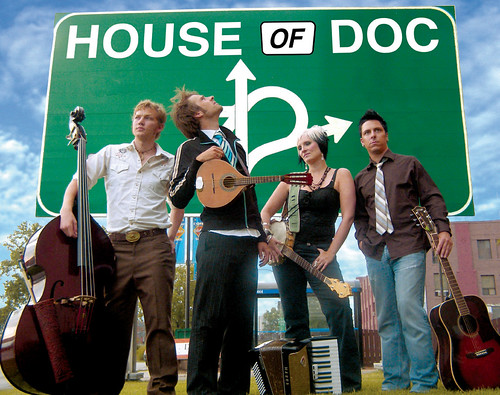
Hailing from Winnipeg, House of Doc’s third album East of West celebrates love, life, and Canadian sensibilities in a light, amusing way.

Upbeat, folksy, and altogether jovial, this album provokes the lighter side of everything mundane and shifts the emphasis to family life, escaping the plight of urban noise and reverting to a frugal, simple sound. This is furthered by the altogether familial relation between the members - the group is made up of Matthew Harder, his wife Rebecca and her brother Dan Wiebe. At the first listen, one cannot help but draw parallels to the score of “O Brother, Where Art Thou?” but a version more preoccupied by the Canadian landscape.

Tracks such as “Summerstone” and “Milk and Cookies” are brimming with an optimism that can only be fully backed up by harmonicas and banjos. However, the album as a whole is more profound; in particular, “Simple Times” is a song recorded by one single and immaculate take. Flanked by stripped down, harmonic tunes, East of West has that honest, human quality about it that is only truly appreciated by the humble.

Rebecca Harder croons hypnotically in “Lullaby,” giving it a soulful and melodic contrast to some of their more upbeat, bluegrass tracks. Also, the final track brings the album full circle with a secret song - when was the last time anybody did that?

Country Houses, City Street
The Pickups
Beautifully Misguided Records

Finally! A band so incredibly emo, but not a single pretentious member with that awful, downward bent head gesture and shaggy hair covering one eye. Described as “flaneur-pop,” The Pickups are lovely in a minimalist, micro-pop, fuzzy soft drink sort of way. Touching on ideas like random childhood memories, first loves, and nostalgic neighborhoods, songs such as “Augusta” and “Country Houses” truly capture those fleeting memories that bring up the sentimentality of youthful idealism.


The track “Compromise” immediately brings to mind a casual walk in a park, or a moment of unbridled honesty - the modest sound of Country Houses, City Streets seems to invoke a feeling of unguarded lightheartedness. In particular, “Country Houses” brings the whole introspective sentimentality to the forefront, not unlike a marriage between Belle and Sebastian and Apples in Stereo, discussing notions of lost loves and regret.

The lyrical component to The Pickups adds to their appeal tremendously. Lines such as “There are those hard to love hard to leave/ and the people I love keep on loving me back” spur this overwhelming sympathy and universal understanding that living in a city isn’t easy.

Ultimately, The Pickups illustrate the most common human interactions, but in a modest, poetically minimalist way; it’s their honesty and non-reactionary apathy that will make its way into your heart.

1.24.2008

Dadaism (As opposed to Mamaism)


2008 presents itself as the year of Dadaism, a universal cultural revolution where human beings everywhere have decided that maternal-styled urinals should be placed upside down in order to increase efficiency.

First introduced in Zurich in the 1920’s, these customized reversed urinals have been scientifically proven to decrease splashback, reduce user anxiety, and increase the feelings of artistic merit when faced with the incredibly existential task of purging liquid waste.

Moreover, it has been suggested by biological scientific findings that users feel a tremendous surge of “self worth” after participating in a new method of urination which encourages pretentious, avant-garde, and surrealist artistic possibilities. It is believed by neurologists that these Dadaist receptacles exercise the imagination of human beings, revealing a fantastical, subconscious world of spirituality not typically found in reality, but in a deep dream state.

Inventor, pretentious artist, and senior marketer of the Dadaist toilet, Marcel Duchamp, openly spoke of the benefits of his toilet: “I love myself!” he told the press at the Dadaist New Urinal Conference last Wednesday. When asked about rival Max Ernst’s experimentations in collage media, he muttered that no amount of paste or glue could protect the artworks themselves from the corrosive effects of human urine.

Despite its mostly universal appeal, there are still resisters who disprove of the Dadaist New Urinal, namely the Cubists and Impressionists who insist that urination should remain an “imprecise” or “uncalculated” form of artistic expression. Jackson Pollock advocated at a conference last week that messy drips affirm the instability of the human psyche, and its difficulties of self-validation and affirmations of identity. The Cubists’ main argument is that the new Dadaist Urinal compromises the 90 degree angle necessary between the organ of urination and the receptacle, resulting in an obtuse angle which is wholly dissatisfying on every aesthetic level.

Regardless of these minor complains, the Dadaist urinals will be installed in every public bathroom within the next two weeks. It is rumored that Stalin will be autographing the ones in Russia, posthumously.

1.21.2008

mongrels' oshawa: deliberating a metal revival?


The Mongrels’ debut album Oshawa presents itself to the indie music scene as a beacon of hope for the revival of heavy metal bands who… died out in the late 80’s. But fear not! This album as a whole is a solid effort by singer Amy Dyamite who can rail like a freight train.

Named after a rather industrial and noxious sounding Ontario city, Oshawa brings out a kind of raw humor that only one could overhear while working at a car wrecking lot. However, there’s far more to that, as the sextet borrows from Zeppelin’s mystical epic rock themes in songs such as “Contemplating the Wizard” which bring out that fantastical, metalesque sense of humor.

The album opens with "Bongo," a quasi-cacophonic guitar sludge of a song not unlike Iron Maiden trying to imitate The Darkness. Angry sounding, but actually fiercely hilarious lyrics surface in their songs “City Living” and “All In My Head,” where they break out the gang chorus riffs in innocuous synchrony. Tacky but somehow cool, they manage to include cowbell in the heart of the album, in “Needs Got Needs,” which was a complete surprise.

Coming full circle on this album, The Mongrels actually sound eerily like Heart. It’s a toss up between late 70’s, 80’s metal-rock that occasions electro synthetics, fronted by a hardcore female vocalist and five guys who probably have distastefully large hairstyles.